
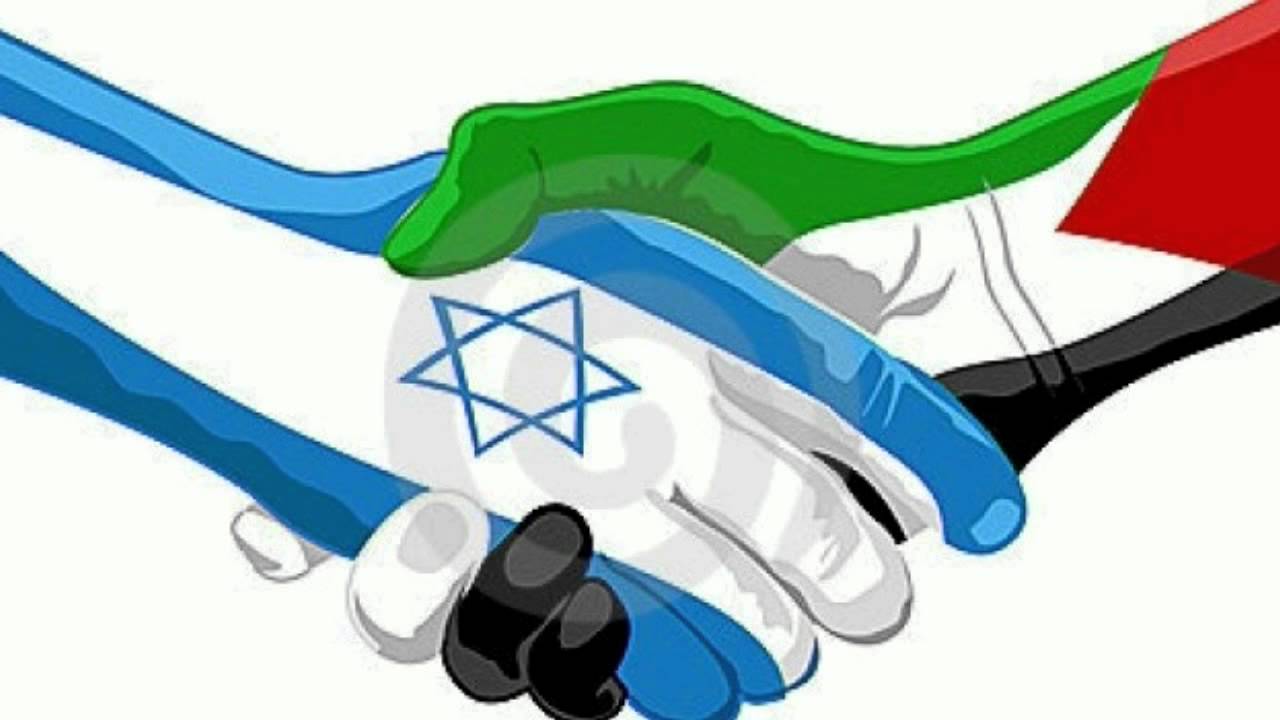
Propaganda: Israel Does Not Want Peace
Pro-Palestinians think Israel is only interested in war and taking all the land.
Below is also an argument against those accusing Israel of occupation, as clearly Israel has been trying to settle borders.
Here are 6 peace proposals that Israel was ready to accept to end the conflict, but Arabs /Palestinians rejected:
1) 1937 Peel Commission
2) 1947 UN Partition Plan
3) 1968 Allon Plan
4) 2000 Camp David Summit
5) 2008 Olmert Abbas Talks
6) 2020 Kirscher Peace Plan
There have been many more initiatives however, they were arguably not as advanced as the above ones.
——————————————————————————————————————–
The Israel-hater response is always: “well the plans were not in Palestinian’s favour”, with which I respond with the below:
1) 1947 UN Partition Plan PA leader Mahmoud Abbas would have accepted the first two plans.
https://www.reuters.com/article/us-palestinians-israel-abbas-idUSTRE79R64320111028
2) Camp David Summit 2000
-This is Clinton talking about his efforts at the summit
“I killed myself to give the Palestinians a state”
https://youtu.be/xfHhVgijtsg
– “Arafat didn’t negotiation, he just kept saying no” https://www.theguardian.com/world/2002/may/23/israel3
3) 2008 Olmert-Abbas Talks
– PA chief negotiator, at that time, Saeb Erakat saying that 100% of West Bank territory was offered.
https://palwatch.org/page/15619
– Mahmoud Abbas admits he rejected the plan
https://www.timesofisrael.com/abbas-admits-he-rejected-2008-peace-offer-from-olmert/
– Former Prime Minister of Israel Ehud Olmert talks about how much he was willing to give during the talks with Abbas
https://www.facebook.com/PalestinianVoiceforPeace/posts/2255988414514770
– Abbas responded to the 2020 Trump proposal by running back to Olmert to try and restart the 2008 negotiations.
https://www.timesofisrael.com/netanyahu-livid-as-olmert-meets-abbas-urges-renewed-peace-talks/
—————————————————————————————————————–
Israel haters scoff at the Trump peace plan, some will say that the plan did not involve a Palestinian state, to which I present this link
More informed Israel haters will point to the Saudi / Arab League Peace initiative of 2002 and claim that Israel rejected that, to which I respond with:
The Arab Peace Initiative was in 2002, the 2nd Intifada was happening, there were suicide bombings and hundreds dying. It was not a time to talk peace.
The Intifada was started by Arafat after he rejected the 2000 Camp David Peace proposal. Check the link
The Israeli reactions to the peace proposal were as follows:
The Israeli government under Ariel Sharon rejected the initiative as a “non-starter” because it required Israel to withdraw to pre-June 1967 borders.
After the renewed Arab League endorsement in 2007, then-Prime Minister Ehud Olmert gave a cautious welcome to the plan.
In 2009, President Shimon Peres expressed satisfaction at the “u-turn” in the attitudes of Arab states toward peace with Israel as reflected in the Saudi Initiative, though he did qualify his comments by saying: “Israel wasn’t a partner to the wording of this initiative. Therefore it doesn’t have to agree to every word.”
https://m.youtube.com/watch?feature=youtu.be&v=Ys-V2gZn0N4
https://www.theguardian.com/world/2002/jun/22/israel
Arafat said he would have accepted the Taba Summit proposal in an interview with Haaretz, however it was too late as the 2nd Intifada was raging with many killed and Ehud Barack was on the verge of being voted out, further more it was obvious that Arafat had something to do with the violence that flared up straight after the Camp David Summit failed. The trigger was Sharon’s visit to the temple mount, but the cause of it was Palestinian’s violent response to a failed peace negotiation!
Arafat coordinated PA and Hamas attacks after Camp David Summit failure, says Hassan Yousef Hamas Founder: https://youtu.be/Ys-V2gZn0N4?si=yGbtneJGArFN7KOD

ISRAEL HAS FAVORED PEACE & COEXISTENCE FOR 70 YEARS
ARAB PARTIES HAVE VIOLENTLY REJECTED IT.
The Jewish Agency accepted the principle of partition in 1937.
The Arab parties violently rejected it.
The Jewish Agency accepted the 1947 UN partition compromise.
The Arab parties violently rejected it, starting a war they lost.
After that war, Israel was willing to make peace in 1949.
The Arab League said: NO Negotiations, NO Recognition, NO peace.
After a war in 1956, Israel withdrew from territories it captured in a good faith effort for peace. The Arab League reiterated its 3 NOs.
After another Arab war in 1967 seeking to destroy Israel failed, Israel accepted UN Security Council Resolution 242 (which is binding on the parties). The Arab League rejected it.
After another Arab war in 1973 failed, Egypt finally opted to give peace a chance. It found a ready, willing and able peace partner in Israel – then under its most right-wing government ever. No other Arab party accepted President Carter’s invitation to make peace at Camp David. For doing so, Sadat was assassinated and Egypt expelled from the Arab League.
After Arafat painted himself into a corner by supporting Saddam against Kuwait and alienating his Gulf sponsors, he was forced to finally (if begrudgingly) give peace a chance – with a ready, willing and able Israel.
Enter Hamas, who gained infamy in the 1990s not for “resisting” the “occupation” but seeking to blow-up the nascent peace process.
Alas, it was a charade anyhow. Arafat walked out of President Clinton’s Camp David, having “said no to everything” [Clinton quote] and without as much as a counter-offer (thus the mis-perception that Israel is “dictating” peace terms). Arafat then ran out the clock in Washington and Taba.
We’re still waiting for the Palestinian Authority to implement the steps required of it at the outset of Phase I of the Roadmap to Peace.
In 2008, Abbas walked out on negotiations with Olmert.
Before Olmert was in legal trouble, before he was in political problems (that’s a reversal of cause and effect. He got into political trouble for offering so much and getting nothing in return).
In 2010, Abbas squandered Netanyahu’s construction moratorium, insisting on further preconditions (negotiation is so unpopular amongst the Palestinian Arabs that they try to negotiate without negotiating).
In 2014, Abbas undermined the Kerry initiative.
As the saying goes: The Palestinian Arabs have never missed an opportunity to miss an opportunity to make peace.
Just how funny is it that the flunkies not only ignore this, but they themselves oppose peace with Israel, seeking its destruction. They are war-mongers who are fueled by blind hate.
We have heard their blood curdling cries and aspirations (e.g. “This will be a war of extermination and a momentous massacre which will be spoken of like the Mongolian massacres and the Crusades”), and seen these echoed here by the “anti-Zionists”. Including by an admin who voiced hope that no one would offer refuge to the Joooz after they were thrown into the sea.
The same pattern is discernible in poetry and songs. Zionist Israel produces works yearning for peace. Arabs produce screeds calling for destruction and “rivers of blood”.
Professor Benny Morris:
|| The shift in Zionist ideology from an ideologically pristine demand for all of Palestine to a sober acceptance of partition was not paralleled in the development of the Palestinian national movement. This asymmetry has underpinned the conflict since the 1930s.
What Really Happened at the Camp David II Summit?
https://honestreporting.com/camp-david-ii-summit/
Abbas rejected Trump 2020 plan before even seeing it. https://www.timesofisrael.com/palestinians-prefer-wait-and-see-approach-to-trump-peace-plan-poll/
Jews rejected the Peel commission ? Not true.
“While the Zionist movement, after much agonising, accepted the principle of partition and the proposals as a basis for negotiation”; p. 49: “In the end, after bitter debate, the Congress equivocally approved – by a vote of 299 to 160 – the Peel recommendations as a basis for further negotiation.”
Morris, Benny (2004). The Birth of the Palestinian Refugee Problem Revisited. Cambridge University Press. pp. 11, 48, 49. ISBN 978-0-521-00967-6. Retrieved 25 July 2013. p. 11:
https://books.google.com.au/books?id=uM_kFX6edX8C&pg=PA11&redir_esc=y#v=onepage&q&f=false